


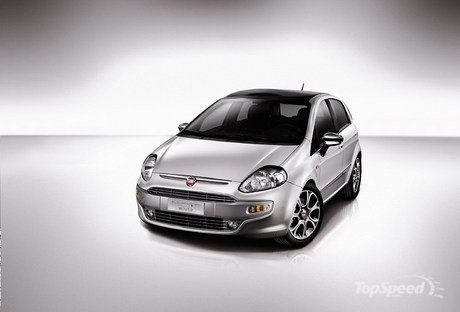
 2010 Fiat Punto Evo front view
 2010 Fiat Punto Evo picture
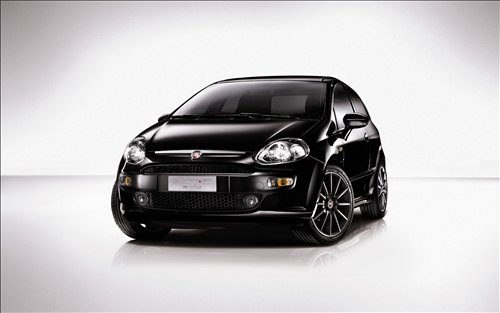 2010 Fiat Punto Evo best car
|
|
|---|
|
|
|---|
2010 Fiat Punto Evo front view2010 Fiat Punto Evo picture2010 Fiat Punto Evo best car


 It is pretty easy to know when official pictures of a car are going to pop up. First, Carscoop has shown sketches Fiat has released to 500 fans. Later on, the images have leaked (as if Fiat did not want to have them widespread throughout the whole internet...) and Carscoop has also been the first one to show them. Good work, guys! Thanks to them we can also show you the first official images of the pocket rocket Fiat has build over the 500’s base. And what a car it promises to be!


On January 29, the new Fiat Bravo will be presented to the international media in Rome, going on the market all over Europe in the following weeks.
The model is built in the Piedimonte S. Germano plant (Frosinone), and aims to become a benchmark in the most important segment of the European market. To achieve this goal, the Fiat Bravo has been designed and developed as the ideal synthesis of Beauty and Substance.
Developed by the Fiat Style Centre, the exterior design of the model is unmistakably ‘Italian’, another step forward in the development of the brand’s new stylistic identity.
The new Bravo arouses emotions at first glance, and it welcomes driver and passengers aboard in a passenger compartment where they will appreciate the quality of the materials and the care dedicated to even the smallest detail.
The Fiat Bravo cleverly combines a compact five-door body with an extraordinary amount of interior roominess: it is 434 centimetres long, 179 cm wide, and 149 cm high, with a wheelbase of 2.6 metres, and a loading capacity of 400 litres that tops its class.
The Fiat Bravo aims to be a car of ‘substance’, thanks to a lavish array of technological features and quality standards worthy of a higher class where safety, comfort and driving enjoyment are concerned.
The Fiat Bravo is an agile car that is entertaining to drive in every situation, thanks in part to the wide choice of engines, which include the popular turbodiesel 1.9 Multijets (120 and 150 bhp), the 90 bhp 1.4, and a new family of turbocharged T-JET petrol engines (120 and 150 bhp 1.4 Turbo) that now make their debut, combining low consumption and outstanding performance.


The new Fiat Bravo is a perfect balance of Beauty and Substance, another milestone in the process to update the brand's product range. This extraordinary period of change is symbolised by the new logo that makes its debut on the front of this new model, with which Fiat will tackle the challenges of the future, without turning its back on its past century of history. This essential sign, full of references to tradition, was created to express 'change in continuity', and to represent from a modern viewpoint a human and technological heritage that few of the world's carmakers can boast. Historical identity and state-of-the-art engineering skills, pride in its past and a renewed determination to innovate: this is the context in which the new Fiat Bravo was developed, a beautiful well-built Italian hatchback, which is agile, entertaining to drive, and competitive, thanks to the excellent balance between content and price. The new Fiat Bravo is 'concrete beauty', a car that reiterates the aesthetic canons of Italian styling tradition. It was designed to give customers the substance that comes from outstanding safety and reliability, coupled with the enjoyable, sporty driving style that the whole world expects from an Italian car.
The new model was presented in the spectacular setting of the Stadium of Marble in Rome, the Eternal City, in one of the most important examples of Neoclassical architecture. This beautiful stadium, which is inside the Foro Italico, was built in the 1930s by Renato Ricci (1896-1956), who decided to decorate the stands with an array of statues in Greek style produced by young sculptors who were unknown at the time. The end result is an extraordinary stadium where each figure, sculpted in white marble, embodies the power of an athletic movement in a form of refined beauty. One of the characteristics of Neoclassical art was to reproduce reality by taking Beauty as the ideal of perfection and balance, not just copying nature but trying to grasp its intrinsic essence.
The decision was a pondered one, because the goal of this artistic movement, which developed in Europe between the late 19th and early 20th centuries, was to recover in a contemporary key the aesthetics, forms, noble materials, building techniques and artisan skills of Graeco-Roman tradition, the cradle of every subsequent artistic manifestation of Western culture: from literature to the theatre, music and architecture. The neoclassical artist did not improvise, but summed up tradition in every work, with exemplary control over his emotions, perfect mastery of his materials and a broad knowledge of history.
The choice of this site underlines an ideal parallel with the Bravo project. When they developed the project, the engineers, designers, technicians and marketing staff also set out to create a 'new classic': in the design, by references to the great Italian styling tradition; by respecting the 'fundamentals', such as the quality of the materials and the assembly, safety, and exploitability of space, and comfort, which have always decreed a car's success; and finally, in the technological components and cutting edge engineering processes, including recourse to virtual development techniques that have made it possible to cut lead times and to check even the tiniest details related to quality and performance thousands of times.
The launch is charged with other symbolism. The New Fiat Bravo project challenged accepted paradigms where the design and development of a new model are concerned, in terms of time and methodologies. This extraordinary result was achieved thanks to the rigorous integration of the best processes, and the application of the most advanced technologies, but above all the essential contribution of Fiat's men and women, and the commitment, creativeness and love that they put into their work. To convey this immense undertaking, for the debut of the new Bravo, Fiat insisted on the extraordinary participation of the performers of 'Le Cirque du Soleil': a perfect organisation, but above all 'the best artists in the world', as the international press has described them. It is certainly one of the most extraordinary live performances on the planet.
'Le Cirque du Soleil' employs about 3000 people, and performers include numerous Olympic champions and former champions, who currently give life to 5 resident companies (all in the United States) and 6 touring companies that perform simultaneously all over the world, and are regularly sold out. The various shows share maniacal attention to the tiniest detail, because everything is done by hand and nothing is left to chance. It was the first time that 'Le Cirque du Soleil' has put on a performance in Italy designed specifically for a corporate event, in front of an audience of more than 6,000 journalists, dealers, suppliers and representatives of large client companies from 72 countries, plus 3000 children from Rome who attended the first night and enjoyed a magical dream come true.
The parallel with the Circus world is appropriate, because the circus is hard work, talent, and creativeness, preparation and dedication, professional skill and passion, coordination, collaboration and teamwork, dexterity and lightness, magic without tricks, a dream but not an illusion. Just like the project to develop a new car: months of hard work, involving hundreds of people, and a huge investment. A perfect mechanism, for a spectacle that leaves no space for pretence or for second chances. At the first turn of the key, everything must function perfectly, year in and year out, repeat after repeat.
Designed by the Fiat Style Centre, the model sets out to attract the public with its uncluttered, smooth lines, which on one hand confirm Fiat's determination to create a new 'family feeling', beginning with the Grande Punto, while on the other hand they reinvent the stylistic elements of the great Italian car-making tradition, without exaggeration or stylistic excesses: authentic beauty in other words, that is reassuring and easy to understand. The raked, forward windscreen, the drop-shaped headlights, the sporty grille that frames the new logo, and even the colour chosen for the launch campaign, known as Maranello Red, which is a clear tribute to the best-known symbol of Italian automotive excellence: Ferrari.
The new Fiat Bravo is born from this cultural and stylistic heritage, a five-door saloon with a sleek, aggressive line, which is refined and compact at the same time. It is 434 centimetres long, 179 cm wide, and 149 cm high, with a wheelbase of 260 cm, and a loading capacity of 400 litres that tops its class.
The beautiful 'dress' made by Fiat contains all the substance of a car built to surprise in the category that rules the European market, to convince a clientele that considers the cars of this class as a real investment, because they are the family's main car. The Bravo aims to make the difference in terms of quality, comfort, practicality and the versatility of the interior. Anyone who gets into the car will immediately be aware of the quality leap that everyone at Fiat was determined to achieve. The refinement of the materials and the colour combinations, the solidity, attention to detail and painstaking assembly, all represent a new standard for Fiat and a benchmark for the market.
Substance also means performance, safety and technology.
The launch of the new Fiat Bravo is also an opportunity to present the new family of turbocharged T-JET petrol engines (120 and 150 bhp 1.4 Turbo), which combine fuel economy, low emissions and exceptional performance, and now join the popular range of Multijet common rail turbodiesels (1.9 litres delivering 120 and 150 bhp) and the 90 bhp 1.4 16v petrol engine.
Comfort is enhanced by the pinpoint steering and excellent roadholding, and the choice of two tried and tested suspension systems which have been suitably modified and updated: an independent MacPherson system at the front, and a semi-independent torsion axle with interconnected wheels at the rear.
The Fiat Bravo was designed to score maximum points in passive and active safety tests, thanks to several airbags (as many as 7), three-point seat-belts with pre-tensioners and load limiters, and five head-restraints. Another aspect of safety regards the 'Pedestrian impact', which was taken into account during the design of the chassis, designed to maximise the absorption of this type of impact. The new model also features the most sophisticated electronic systems to monitor the vehicle's dynamic behaviour, such as ABS complete with EBD, the sophisticated ESP system with a Hill Holder, and ASR anti-slip regulation.
The Fiat Bravo embodies new technologies, not only where engineering is concerned, but also in the use of electronics at the service of comfort and well-being on board. The best example of this is the new generation of the 'Blue&Me' system, known as 'Blue&Me Nav'. This technology, which is a Fiat Group exclusive, developed with Microsoft, combines the functions of the first generation with a highly efficient pictogram navigation system, and access to a series of telematic services, that convey the true spirit of Fiat: simple, useful and at the right price.
The 'dual-zone' automatic climate system, a choice of two radios with specific Hi-Fi systems, the large panoramic opening sunroof, Cruise Control, a rain sensor, parking sensors and foglights with a self-adaptive cornering function, complete the array of equipment to customise the car, and to make life on board a pleasure for every occupant.
And finally, to underline the generosity of this project, the Fiat Bravo range will be broad and comprehensive right from its launch, with a choice of 5 engines, 12 elegant liveries and 4 outfit levels (Active, Dynamic, Emotion and Sport), all designed to offer the customer outstanding value for money.
The new Fiat Bravo aims to become the benchmark for what is the most important segment of the European market, which accounted for over 3,400,000 cars sold in 2006, or little more than one fifth of the total market (a value that has been practically constant since 2000).
It is clearly a very interesting segment but one that is also highly competitive, with about 30 different models, from full-liners and premium European, Asian and American manufacturers. We should also underline that the largest grouping in the medium sized saloon category is made up of 2-box saloons or hatchbacks, which account for over 71% of sales. About 25% of total sales for this category are destined to the corporate market, where qualities such as residual value, operating costs, reliability and price are important considerations. But these are areas in which the Fiat Bravo will be one of the most competitive models on the market. With these expectations, the long-established plant in Piedimonte S. Germano (Frosinone) and its 3500 employees are preparing themselves enthusiastically to turn out an average of 120,000 cars a year, which will be marketed in 55 countries around the world, starting in 2007.


The good looks of a coup, the roominess of a saloon
Developed by the Fiat Style Centre, the design of the Bravo is a perfect blend of aggressiveness and power, as you would expect of a 5-door compact, set off by an extraordinary amount of roominess inside. A sporty, flowing line that guarantees robustness and agility in spite of its aesthetic refinement.
To start with, the new model is generously sized 434 centimetres long, 179 cm wide, 149 cm high and with a wheelbase of 260 cm “ even if the Bravo smooth, almost aggressive lines give it a sporty, sparkling and extremely dynamic look, designed to underline its “muscles simply and straightforwardly. The Fiat Bravo strong personality is particularly evident at the front; the front end is important, like that of a small GT, into which the elongated headlights are set with original tension and strong Italian styling (they are the work of Magneti Marelli - Automotive Lighting).
The externals a succession of classical references, an excellent opportunity to re-read the brand traditional styling elements in a modern key. Take a quick look. First, the original rear light clusters which recall those of the previous Bravo, which were also the work of Magneti Marelli - Automotive Lighting. The front reiterates the distinctive features of recent Fiat models, particularly the Grande Punto: from the raked, forward windscreen to the drop-shaped headlights, inspired by the well-known Italian GT tradition, down to the graphics of the lower air intake and the grille. The tapering of the front and rear underline the impression of great compactness conveyed by the Fiat Bravo. But this in no way diminishes the elegance of the lines that run smoothly from front to back, into the integral bumpers and the light clusters with their converging wedge shape. Suffice it to say that in the rear, the waistline is high and slopes sharply, to emphasise the sense of sportiness.
The styling of the Bravo reconciles stylistic elements that were once irreconcilable. For example, a front end that is aggressive but modelled to respect pedestrian safety requirements. Both the structure and the modelling are the fruit of detailed analysis, developed in line with the latest legislation, which envisages rounder shapes, a wider bonnet and a tapered bumper structure, which is easily perceptible in the plan view, to reduce the area involved in a collision to a minimum.
And if the Fiat Bravo conveys a new concept of sportiness on the outside, the inside environment is one of superb quality and painstaking attention to detail, giving a sensation of great solidity and compactness. The design, materials and fabrics used are all enhanced by the carefully chosen colour combinations, which underline the elegance or sportiness of the different versions. The Active outfit offers 2 interior environments, the Dynamic and Emotion versions offer a choice of 3 environments with 3 different shades, and the Sport outfit proposes 2 environments in 2 different colours. Bravo customers are also offered leather upholstery: on the Dynamic and Elegance versions, this comes in black with grey or blue stitching, or in marmoset with contrasting stitching. The Sport outfit offers black leather upholstery with red or blue overstitching.
The front and rear seats of the Bravo deserve a special mention. They were designed to guarantee the best possible comfort to all passenger percentiles, and developed in close collaboration with the best Italian ergonomics and sports medicine specialists. First of all, to enhance comfort and to absorb vibration in particular, the front seats incorporate an improved lumbar support system that sustains the back better. The front seats are also padded with foam that adapts to the shape of the body and have an 'antisubmarining' structure that prevents the body from sliding forward, under the seat-belt, in the event of a violent head-on impact. The front seats also offer various adjustments: height, longitudinal (with a stroke of an amazing 240 mm), squab rake (by a knob that provides continuous step adjustment), and lumbar. The height of the head-restraints can be adjusted and, on request, they can be fitted with an anti-whiplash system, which brings the restraint closer to the occupant neck in the event of a collision. And finally, the front seats offer the option of electric movement and adjustment, with intuitive, ergonomic controls.
The rear seat squab splits 40/60, and the seats incorporate an antisubmarining structure and padding with differentiated support in different parts of the seat cushion (this is a parameter that measures the compression of the padding under the weight of the body). The rear seats are also fitted with Isofix attachments for child seats, and three head-restraints.
Great care has gone into the design of the instrument panel (developed by Magneti Marelli), which is enclosed in a dashboard that is turned entirely towards the driver, with soft lines that blend aesthetically with the lines of the facia. The large, immediately visible digits of the instrument graphics make the information easy to read and readily available. At night the illumination is orange, a shade that allows the pupil to focus more rapidly when alternating between the dark of the road outside and the luminosity of the dashboard. The onboard instrumentation is available in two versions, depending on the outfit, and includes a number of important functions. For example, the multi-function display gives access to several menus, and sub-menus. These speak the driver language (there is a choice of Italian, English, German, Portuguese, Spanish, French, Dutch, Polish and Turkish), and offer a wide range of functions, including the time, date, programmable acoustic signal, radio visualisation, check control and more besides. There is also a trip computer, of course, which provides a data set regarding previous journeys and the current journey.
The Fiat Bravo is friendly and practical, with an unbeatable amount of living space and passenger room, that is hinted at by the exterior dimensions. The new model promises comfortable journeys, and the enjoyment of tangible, all-enveloping well-being on board. The engineers have achieved this goal by adopting the latest ergonomic criteria from the earliest stages of the development of the Fiat Bravo to define the parameters that measure a car capacity to respond to the demand for well-being and comfort on board. As a result, the Bravo achieves excellent values for the essential ergonomic functions: space and interior volume, roominess, access, visibility, loading capacity and user-friendliness.
These characteristics have always been winning qualities, and today they are even more important, because we spend more time in our cars, we are becoming more accustomed to cars from higher segments, which are therefore roomier, and the average height of the population is increasing. This is another reason why the Bravo achieves excellent results in terms of transverse roominess at shoulder height, in the front and rear, with values that are outstanding for segment C, in all fields: from roominess to access, visibility and ease of use. This means being able to get in and out of the car easily and comfortably, and finding yourself in a comfortable, protective environment once you are seated.
The interior space in the Fiat Bravo is the result of a good balance between the volumes of the passenger compartment, even though, from the outside, the car is clearly compact and dynamic. The parameters that define the posture, the position of the driving seat and of the passenger seats in the many possible configurations, the overall roominess and the interior volume have all been optimised. The end result puts the Bravo firmly at the top of its class in this context. For example, the combination of a driver seat that adjusts for height and a steering wheel that adjusts for height and reach, produces excellent values of roominess as well as a perfect driving position for drivers of all heights (from 1.50 to about 2 metres). Even if the driver himself is tall, there is still room for an equally tall passenger to sit comfortably behind him; it is the only car in its segment that can accommodate 184 cm tall passengers comfortably on the rear seat when those in the front seat are in the 90 percentile, in other words 183 cm tall. And this does not detract from the luggage capacity which is 400 litres in the normal configurations, and 1175 litres with the rear seats folded down.
Driving is made particularly enjoyable by the position of the pedals, the steering wheel alignment, the position of the armrest and footrest, the excellent manoeuvring of the gearshift and the perfect visibility of the instrumentation and the main controls. This sensation of enjoyment is heightened by the excellent profiling of the wrapround seats that support the body even in more dynamic driving situations. And the adoption of the latest virtual ergonomic structuring techniques on the Fiat Bravo ensures that all the onboard instrumentation and primary controls are extremely user-friendly; all the controls are within easy reach, perfectly visible and easy to use. The interior is one of the most practical in its category, with a useful storage unit under the passenger seat, pockets in the doors, a centre console with space for bottles, documents, maps and coins, storage compartments on the facia for keys, eyeglasses and remote controls, and a large glove compartment in front of the passenger.
A new logo, which underlines the new strategy that has been implemented by the brand in recent months, now debuts on the front of the new Bravo, and will gradually be adopted on all Fiat models. In this dynamic context, there has been a constant succession of new products (from the Croma to the Grande Punto, the Panda, the Fiat Sedici and now the Bravo), and a tangible sign was needed to symbolise the turnaround that is driving Fiat towards new challenges.
Created jointly by RobilantAssociati (an agency specialising in Brand Advisors & Strategic Design) and the Fiat Style Centre, the new symbol is derived from the famous shield that decorated the front of Fiat cars from 1931 to 1968, with the vertically elongated letters of the word 'FIAT' standing out against a ruby red background, encased in a chromed round frame. It has a three-dimensional effect which conveys an idea of technology, Italian design, dynamism and a strong personality, while it also harks back to the round logo (white wording against a red background, surrounded by laurel leaves) that identified powerful, high performance Fiat models for many years.
The essential, strong new logo therefore conveys 'change in continuity', a sign of the past re-read in a modern key which is particularly representative of Fiat today, a brand with its sights on the challenges of the future but also proud of its historical identity. The two main elements of the new logo (the shield shape and the red colour) immediately bring to mind the Fiat 524 of 1931, which was the first to sport a rectangular logo that blended into the new grille, designed with stylistic but also aerodynamic pretensions, in the shape of a shield with vertical elements.
The new Fiat logo sums up the mission of an Italian company that for over one hundred years has been building cars with beautiful styling, that are accessible and capable of guaranteeing a better quality of everyday life.


